Renting Tables and Chairs for a Business Event: A Planning Guide
Hosting a launch, open house or workshop? How to count seats, choose table shapes, plan delivery and keep guests comfortable when you rent event furniture.
2 minute read
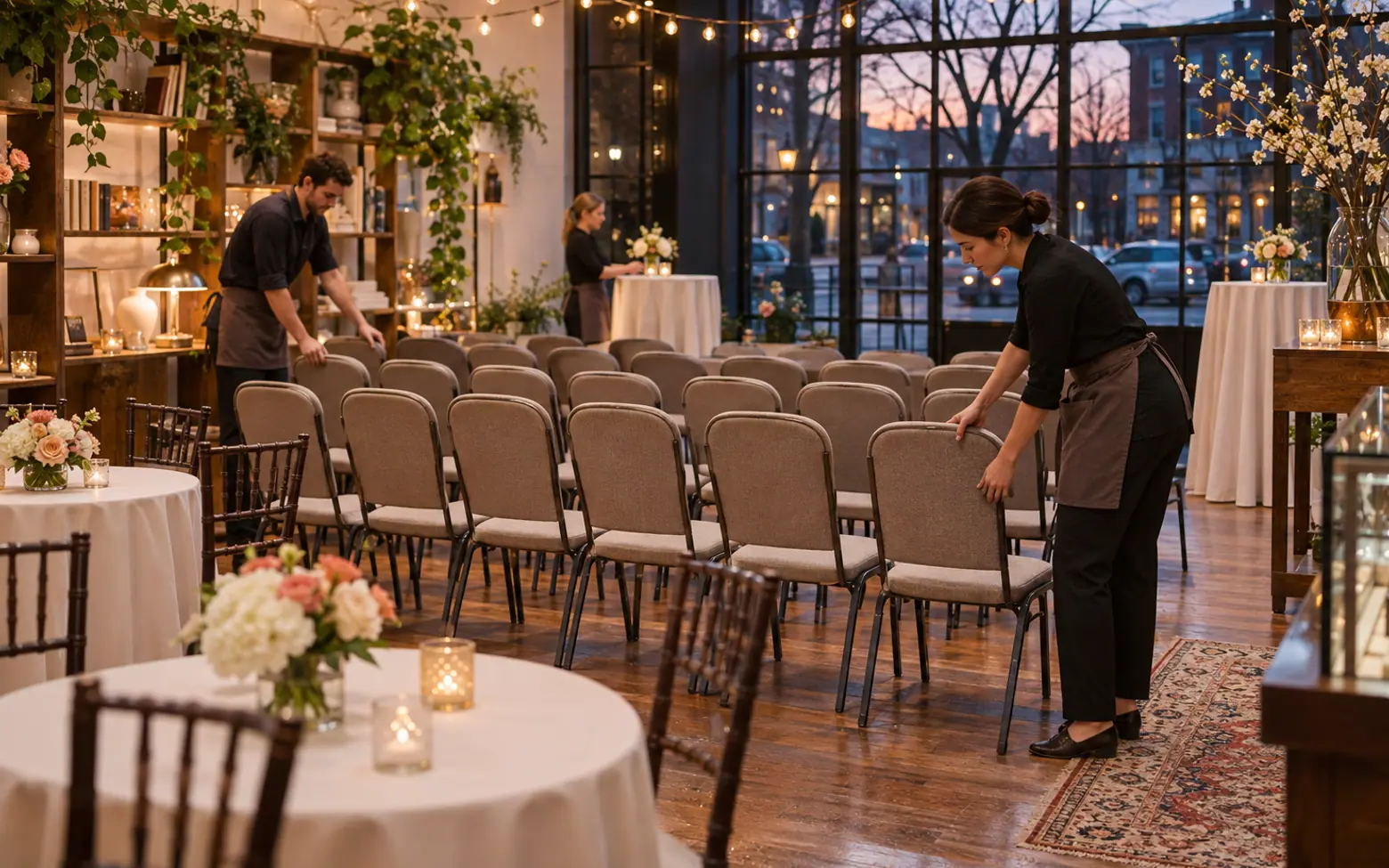
Grand openings, customer workshops, holiday open houses and investor evenings all have one thing in common: people need somewhere to sit, set down a drink and talk. Few small businesses own enough furniture for that, so renting is usually the sensible choice. A little planning keeps the event comfortable and the bill predictable.
Start With the Format, Not the Furniture
Decide what guests will actually do before you count anything. A seated workshop needs a chair for everyone and table space for notes or laptops. A standing reception works with a few high-top tables and seating for perhaps a third of guests, mostly for those who need it. A dinner needs full table settings and more floor space per person.
Write down the expected headcount, then add a small buffer for walk-ins and staff. It is easier to stack a few spare chairs at the side than to watch guests hover with nowhere to sit.
Choosing Table Shapes
- Round tables encourage conversation and suit dinners and networking.
- Long rectangular tables fit classroom-style workshops and buffet lines.
- High-tops keep a reception moving and take up little floor space.
- Small side tables near seating give people a place to put down a glass or plate.
Comfort Matters More Than It Seems
A two-hour workshop on hard folding chairs feels long. For anything where guests sit more than an hour, ask about padded chairs or chairs with proper back support, and leave enough space between rows that people can get in and out without everyone standing up. Good providers for the rental of tables and chairs will advise on spacing and comfort for the length of your event, which is worth asking about rather than simply ordering the cheapest option.
Think about accessibility too: clear routes for wheelchairs and strollers, a few chairs with armrests, and seating near the entrance for guests who should not have to cross the whole room.
Delivery, Setup and Pickup
Confirm in writing when items arrive, who sets them up, and when they are collected. If you lease your space, check the building's rules on deliveries, loading areas and after-hours access, the kind of detail that is worth raising when negotiating a commercial lease if you plan to host events regularly.
What to confirm with the rental company
- Is delivery, setup and breakdown included, or charged separately?
- What happens if items arrive damaged or the count is short?
- Are linens included, and are they cleaned by the provider?
- What is the deadline for changing the order?
Budgeting the Event
Furniture is usually a modest share of an event budget, but delivery fees, late pickups and last-minute additions add up. Get a written quote, compare it with the expected benefit of the event, and fold it into your cash flow forecast for the month. A well-run event that leaves guests comfortable is far more likely to turn into repeat customers than an expensive one where nobody could find a seat.
 International TV for Expat Customers: A Small Venue's Guide2 minute read
 Digital Display Boards for Small Businesses: Menus, Lobbies and Windows2 minute read
 Screening Nights as a Small-Business Marketing Idea5 minute read